

Ways Columbus and Central Ohio Deal with Litter
Class 1 of 4

Class 1 of 4
How Litter Harms Humans, Animals, and the Environment
Class 2 of 4

Class 2 of 4
Litter: What Is It, Where Does It Come From, and Why Is It a Problem?
Class 3 of 4

Class 3 of 4
History of Litter: Problems and Solutions From the Ancient Syrians to the Present Day
Class 4 of 4

Class 4 of 4
History of Litter: Problems and Solutions From the Ancient Syrians to the Present Day
Litter has been around for centuries, and mankind has had to deal with it through several processes. But the problem of how to reduce it is overwhelmed by how much is being produced. We take a brief look at the history of litter.

Author:
Revised:
May 15th, 2023
The word litter is originally derived from the Latin lectus, meaning “bed.”
The “bed” definition did not survive into Modern English, however. The straw or hay strewn about to serve as bedding for animals was called litter. (The offspring of an animal that was born at one time alluded to the fact that they were born in one “bed.” Thus it’s called a “litter” of puppies.)
Once litter had been applied to animal bedding, it was not far-fetched to use the word “litter” for rubbish scattered about.
As you might expect, disposing of trash has been an issue for centuries.
Garbage Control in Ancient Times
The area that is present-day Syria had the first known wastewater management system. This Mesopotamian country shows evidence of wastewater management beginning around 6500 B.C.
Circa 3,000 B.C. in Knossos, Crete, citizens, not knowing what to do with trash, buried it.
The Han Dynasty (2000 B.C.) had records of “fertilizer recipes,” and the Minoans (1500 B.C.) had evidence of dumpsites outside of the Cretan capital of Knossos.
Sometime around 500 B.C., the Greek city of Athens implemented a regulation regarding trash: Residents were forbidden from throwing waste in the street. The law stated that garbage must be transported and dumped one mile from the city. This helped the city’s appearance and helped reduce disease.
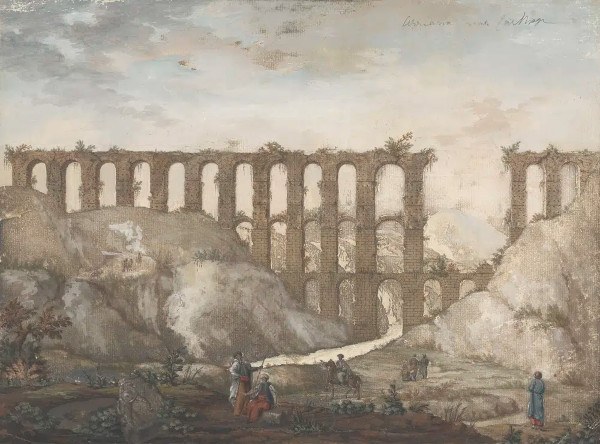 Image Source: Rawpixel
The Onset of the Bubonic Plague
The Black Death was a devastating global epidemic of bubonic plague that struck Europe and Asia in the mid-1300s. Over five years, the Black Death would kill more than 20 million people in Europe — almost one-third of the continent’s population. (While antibiotics now are available to treat the Black Death, according to the World Health Organization, there are still 1,000 to 3,000 cases of plague every year.) Physical contact was largely to blame, but it also spread by fleas that lived on rats, which sustained themselves by eating garbage.
In many European cities, it was common for residents to dispose of rotting food and other trash by tossing it out the window, attracting packs of wild dogs, feral creatures, and disease-spreading pests. In the 15th century, Paris instituted mandatory street cleaning and employed thousands of waste collectors to transport the garbage directly outside the city.
The Age of Sanitation
In 1842, the Age of Sanitation began when a report in the United Kingdom reported that disease was linked to environmental conditions. While sewage and water supply improvements were central to this movement, addressing refuse and garbage also fell under this umbrella.
In the 19th century, in the United States, horse manure blanketed the city streets. Pigs and dogs ran loose, consuming the trash and excreting more dung. Dead animals, particularly horses, were left lying in the streets, facilitating disease. In 1895, New York City became the first U.S. city with public-sector garbage management.
When garbage pickup started in the late 19th century, many cities separated reusable trash from garbage designated for a landfill. Just like today, workers sorted via conveyor belts as early as 1905. The cities sold the reusable trash to industries. And many individuals saved their organics to feed animals.
Early garbage-removal trucks were simply wagons pulled by a team of horses. They became motorized in the early part of the 20th century, and the first closed-body trucks to eliminate odors with a dumping lever mechanism were introduced in the 1920s in Britain.
During World War II, people recycled nylons, tin cans, cooking fats, and even tin in toothpaste tubes for the war effort.
Plastics manufacturing began soaring in the 1950s because of two reasons: it is versatile and the demand for it increased exponentially.
The 1960’s Was a New Era For the Environment
By the 1960s, the first recycling programs started popping up. That’s when Rachel Carson and others were pushing the science of ecology. Politicians started introducing environmental laws.
Curbside recycling programs helped solve a convenience issue. In 1960, just over 6 percent of municipal solid waste was recycled. Since then, recycling rates have increased to about 10 percent in 1980; 16 percent in 1990; 29 percent in 2000, and over 35 percent in 2017. That’s helped decrease the amount of waste going to landfills from 94 percent in 1960 to 52 percent of the amount generated in 2017.
But the prevalence of plastic exploded. In 1967 less than 25 million tons of plastic was produced each year. By 1980, production had doubled. Ten years later, it doubled again to 100 million tons. Today, the plastics industry, estimated to be worth more than $4 trillion, generates more than 300 million tons of plastic a year according to the most recent records — nearly half of which is for single-use items, meaning that it will almost instantly become trash.
The Convention for the Prevention of Marine Pollution by Dumping from Ships and Aircraft (also called the Oslo Convention) was an international agreement designed to control the dumping of harmful substances from ships and aircraft into the sea. It was adopted on February 15, 1972, in Oslo, Norway, and was implemented in April 1974. New York City dumped all of its trash into the ocean until the mid-1900s.
In the 1960s and 1970s, landfills were introduced as a solution. The city dump was born, and it remains the primary method of disposal in the United States today.
During his administration, President Johnson signed over 300 conservation measures into law, forming the legal basis of the modern environmental movement.
Here are just a few:
● Clean Air Act: 1963
● Pesticide Control Bill: 1964
● Highway Beautification Act: 1965
● Water Quality Act: 1965
● Water Resource Planning Act: 1965
● Water and Sanitation Systems in Rural Areas: 1965
● Solid Waste Disposal Bill: 1965
● The Land and Water Conservation Fund (LWCF) Act of 1965 was enacted to help preserve, develop, and ensure access to outdoor recreation resources
● National Historic Preservation Act: 1966
● Air Quality Acts: 1966 and 1967
The Clean Air and Water Quality Acts were also enacted in this era. These established government authorities to take action against air and water pollution. They also provided money for research on pollution, and set standards for air, water quality, vehicle inspections, emissions, pollution, and fuel additives and alternatives.
The Onset of the Environmental Protection Agency
President Richard Nixon created the EPA on December 2, 1970.
1971: In partnership with the Keep America Beautiful Ad Council, launched what became known as the “Crying Indian” PSA campaign, one of the most successful PSA campaigns in history.
In 2017, the Chinese government announced the National Sword policy. Before this, the U.S. sent 931 million kilograms of plastic waste to China and Hong Kong. The U.S. had been shipping bundles of scrap this way since at least 1994. Much of the “recycled” plastic scrap that the U.S. sent to China appears to have been burned or buried instead of being refashioned into new products.
Because the U.S. can no longer ship its plastic waste to China, much of that waste is going to other countries that may or may not recycle it. In May 2019, the U.S. sent 64.9 million kilograms of plastic scrap to 58 countries.
From 2015 to 2018, overall domestic waste generation rose 11.6% to a record-breaking 292.4 million tons of municipal solid waste.
EPA began collecting and reporting data on the generation and disposition of waste in the United States more than 35 years ago. The total generation of municipal solid waste (MSW) in 2018 was 292.4 million tons or 4.9 pounds per person per day. Of the MSW generated, approximately 69 million tons were recycled and 25 million tons were composted.
Litter in the 2000s
Together, almost 94 million tons of MSW were recycled and composted, equivalent to a 32.1 percent recycling and composting rate. An additional 17.7 million tons of food are were managed by other methods: animal feed, bio-based materials/biochemical processing, co-digestion/anaerobic digestion, donation, land application, and sewer/wastewater treatment
Since the EPA began tracking plastics recycling in 1994, when the U.S. recycled less than 5 percent, the rate peaked at 9.5 percent in 2014. Consumers share some of the blame, but much of the waste that is put into recycling bins and bags gets put in landfills and is burned because there’s no market for it.
The U.S. is now burning six times the amount of plastic it’s recycling — even though the incineration process releases cancer-causing pollutants into the air and creates toxic ash, which also needs to be disposed of somehow.
Litter makes the news daily, such as efforts by groups trying to clean the Great Pacific Garbage Patch, also known as the Pacific trash vortex. (It’s actually multiple collections of debris that’s twice the size of Texas.)
The World Bank predicts that global waste generation could increase by 70% by 2050, reaching 3.4 billion tons. The use of landfills may become much more expensive now that methane emission regulation is atop the domestic and global climate agenda.

(Laura Margison/Pew Communications)
Only an integrated approach can be truly successful:
● Increasing collection coverage
● Reducing demand for single-use and unrecyclable plastic
● Improving the business of recycling
But even in the best-case scenario where immediate action is taken, approximately 710 million tonnes (a tonne is 1000 kilograms) of plastic waste will be released into the environment by 2040. The good news is that it would mean an 80% reduction in the levels of plastic pollution.
What to do About Litter Today?
As you’ve seen, litter is an age-old problem. Cities have always grappled with what to do with their refuse. The problem has become more acute over the centuries, especially so in the last few decades as the population has grown and grown.
It’s a complicated issue, and so the ways to fight it are equally complicated.
The phrase “reduce, reuse, recycle” was created in the mid-1970s when we started to become more aware of our impact on the environment.
It’s still apt, today.

Image Source: Rawpixel
At Fire & Ice, we understand the importance of taking care of our Central Ohio community.
We recycle metals from obsolete HVAC units and their cardboard packaging. The money we get from recycling the materials goes to charity.
In Columbus, Ohio, we have a huge litter problem, especially along our highways. To make our city and to beautify our roadways, we are sponsoring the litter pick-up of 200 miles of highways. (Stay tuned for more information on this green initiative.)
Working together, we can make our communities a cleaner, safer place to live and work.
