
How Does an Air Conditioner Work?
Class 1 of 6
Class 1 of 6
Replacing Your AC Unit
Class 2 of 6

Class 2 of 6
What's The Right Size of Air Conditioner for Your Home?
Class 3 of 6
Class 3 of 6
One-Stage, Two-Stage & Variable-Speed ACs: Differences & Benefits
Class 4 of 6

Class 4 of 6
What’s a Seer Rating? - Buying a New Air Conditioner
Class 5 of 6
Class 5 of 6
How Long Do Air Conditioners Last?
Class 6 of 6

Class 6 of 6
One-Stage, Two-Stage & Variable-Speed ACs: Differences & Benefits
What are the differences between one-stage, two-stage and variable-speed ACs? We break down the differences and compare the benefits of each system.

Author:
Revised:
July 15th, 2020
Your air conditioner cools your house. End of story...right?!
Unfortunately, no, that’s not the end of the story, because there are a bunch of options for any homeowner these days. Nowhere is this more true than in the various speeds available for your air conditioning unit.
Fortunately for you, though, you found our article. At Fire & Ice, we specialize in educating homeowners on all of their options so that they can make the best choice for their budget and comfort needs.
The average homeowner doesn’t know the differences in technology between one system and the next, so it can all seem somewhat similar to them unless it’s broken down by an expert. Many are surprised to learn of the benefits that a two-stage or variable-speed air conditioner can have compared to their current system, even if those options aren’t ultimately the right choice for them.
We’re going to break things down for you as if we were having a face-to-face discussion in your home. The goal, as it is when we visit prospective customers, is to give you all the facts that you’ll need to make the right decision for you and your home.
Differences Between One-Stage and Two-Stage Air Conditioners
The single largest difference between these two is that a two-stage air conditioner has a compressor that can operate at two distinct speeds. A one-stage compressor is either on 100%, or entirely off. The two-stage compressor has this same 100% setting, but also another that is somewhat less. While it varies depending on brand and model, this second stage is generally around 70% capacity.
You’re probably familiar with the traditional one-stage model, and equally familiar with how it will shut on and off depending on the temperature.
Say you set your thermostat to 72 degrees. The AC might let the home get to 73 before kicking on, then cool it to 72 or 71. Then the cycle repeats.
With a two-stage compressor, the system can work less hard when the temperature is close like this, thus using less energy and preventing the need to turn on and off to 100% so often.
Differences Between Two-Stage and Variable-Speed Air Conditioners
Just like the name implies, a variable-speed air conditioner can have up to 700 distinct compressor settings that correspond to varying levels of airflow. The two-stage, while superior to the single-stage compressor in terms of efficiency and options, pales in comparison to the variable-speed.
You’ve probably heard of SEER Rating and how it’s a measure of efficiency. Variable-speed air conditioners are when you start getting to 20 or more SEER rating, which is top of the line for central air systems.
Similarly to how the two-stage can operate at a lower speed when it doesn’t need to be at 100%, a variable-speed system can adjust accordingly to use only the power needed to maintain a consistent temperature in your home.

Pros and Cons of One-Stage AC
Benefits
The big “pro” here is probably an obvious one: initial price.
Single-stage air conditioners are going to be cheapest to purchase and have installed. If you’re on a budget, this is probably your best bet. The good news is, a one-stage AC is still going to cool your home adequately, provided it’s sized properly and installed correctly. So you don’t have to worry on that front.
Drawbacks
The cons are mostly related to efficiency and long-term costs. Your energy bills will be higher since it’s using 100% of its power, 100% of the time that it’s on. While modern systems tend to run very quietly, the start and stop of the air conditioner can also be an annoyance to some.
Example of a Single-Stage Air Conditioner
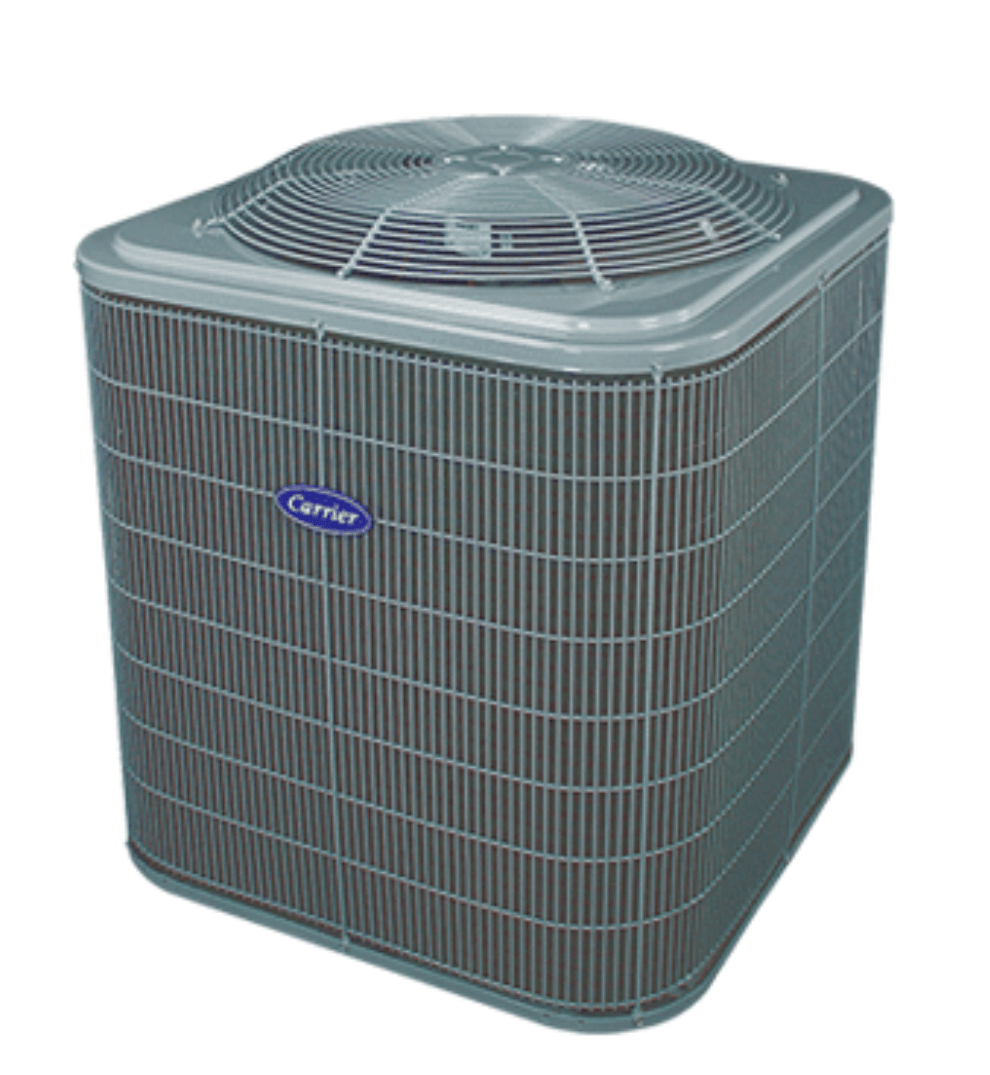
The Comfort series of air conditioners is designed to give you simple, efficient and affordable cooling. Pair them with the right, SEER-boosting indoor unit and you can enjoy the money-saving benefits of improved efficiency.
RELATED: Carrier Comfort (24SCA4) Air Conditioner Product Review
Pros and Cons of Two-Stage AC
Based on the pros and cons of a single-stage AC, you can probably see where this is going. Two-stage air conditioners are going to provide more efficiency compared to a single-stage air conditioner. They’re a nice middle ground between low-end and high-end efficiency and initial cost and will save you on energy costs compared to a single-stage.
Think of it like gas mileage. It’s more efficient to drive at slower speeds than higher speeds, and slamming the pedal can produce long-term wear and tear on your car. The benefits of having a second, slower stage is somewhat similar in terms of efficiency and system usage.
Depending on the model, brand, and other factors like the size of your home, the initial price tag can be closer to single-stage or variable-speed, so you’ll want to consult with an HVAC professional before determining if this is right for your budget.
Example of a Two-Stage Air Conditioner

The Carrier 24ACB7 Air Conditioner offers that perfect balance between budget limits you may have today and your desire for long-term energy savings. At up to 17 SEER rating, the two-stage compressor in this unit will help keep you cool at a reduced cost.
RELATED: Carrier 24ACB7 Air Conditioner
Pros and Cons of Variable-Speed AC
Benefits
Variable-speed air conditioners are the Cadillacs of central air cooling. They’re going to run the most efficiently, and will generally be the quietest as well, since they’re often operating as low as 40% of their maximum power capacity.
You’re also going to save the most on energy costs, and have the greatest degree of control over the temperature in your home. You’ll experience fewer spikes in temperature, like those that happen when single-stage systems or even two-stage systems turn on and off.
In short, your home will be more consistently comfortable.
Drawbacks
The primary downside is the initial cost. The systems don’t come cheap, even if they largely make up that cost in the long run.
The other downside is also related to cost, but regarding repairs. If a part breaks, it can be costly regardless of the system. But the advanced technology inside a variable-speed air conditioner can often incur increased replacement costs and labor costs.
Even if a system is under warranty, most don’t cover labor costs, so you can still be on the hook for more than expected depending on the repair. Be prepared to discuss this with your HVAC partner before choosing this type of system.
Example of a Variable-Speed Air Conditioner

The Infinity 26 air conditioner with Greenspeed intelligence takes Carrier’s most advanced technology to the next level. If it looks like next-gen technology, that's because it is. This energy-efficient AC unit offers enhanced cooling, extra energy efficiency and ultra-quiet comfort where it matters most -- in your home.
RELATED: Carrier Infinity 26 (24VNA6) Air Conditioner
Why Your Furnace Type Matters
You may have heard of the term “equipment matching.” If not, all it means is that the different pieces of equipment in your HVAC system need to be compatible with one another. This is usually in reference to your furnace and air conditioner.
The blower motor in your furnace regulates airflow in the entire system, including the air that’s conditioned by the AC unit. So to run a variable-speed air conditioner, for example, you need to have a compatible blower motor that’s capable of handling the varying stages of the cycle.
This can mean that it’s sometimes impossible to upgrade from a single-stage to a two-stage, or a two-stage to a variable-speed, without also upgrading your furnace/air handler.
So what do you do in these situations where you’d need to upgrade your furnace to install a variable-speed air conditioner? Well, how old is your furnace? It’s often very cost-effective to replace both the air conditioner and furnace at the same time. But if your furnace is still fairly new, it’s probably time to explore options that don’t include a variable-speed AC.
Humidity and Air Quality Differences
Humidity affects the temperature of the room, or more specifically how it feels to us. 70 degrees in Arizona is not the same as 70 degrees in Florida.
When an air conditioner runs, it’s removing humidity from the air as well. This makes the system’s operation more efficient.
So it should come as no surprise that because a two-stage AC runs for longer than a single-stage (albeit at a lower power level), it’s removing more humidity from your home. Similarly, a variable-speed system will remove even more humidity.
It’s often a great idea to pair a whole-home dehumidifier with an air conditioner to increase its efficiency. This is true of any type of system, but can be another consideration as you weigh your options between system types. Depending on the average relative humidity of your home, and the type of air conditioning system you end up with, a discussion about dehumidifiers is a good one to have with your HVAC contractor.
Similarly, a system that runs for longer, which a variable-speed system will do, is circulating air in your home more frequently. This, in turn, will remove more particulates from the air. This is good news for your overall air quality, but can occasionally have implications for things like frequency of filter cleaning. Make sure you’re aware of these and any other considerations that your HVAC provider considers relevant.
How Much Can I Save With Higher SEER Rating?
Depending on the system you have currently, the answer could be quite a bit. Assuming the system is installed to code and is running efficiently, you could be looking at up to 65% savings annually!

Granted, that’s a jump from an 8 SEER system to a 22 SEER, which is pretty rare, but it’s a good example to show you what’s possible when you go from older equipment to the best modern equipment.
It’s also important to note that some jumps aren’t as pronounced. The expected cost difference between 15 and 16 SEER, for example, is only 3%. At that point, the discussion becomes as much about comfort and budget as it does about annual cost savings.
Choosing the Best Air Conditioner
There isn’t a “best” option here, but there are better options for individual homes and homeowners.
In learning about the different types, we hope you have a better idea of which one might be for you. Here are a couple more considerations that sometimes help homeowners make the decision.
- How long do you expect to stay in the home? If it’s less than 5 years, you won’t see a lot of the long-term cost savings from a variable-speed system. But if you’re planning on raising a family in this house, for example, a more efficient system often makes more sense.
- In this case, size can make a difference. Modern systems are more efficient than older systems, but they’re also larger as a result. And variable-speed units are the largest of the bunch. Make sure the area where you’re planning on housing your outdoor air conditioning unit is indeed big enough for the dimensions of the equipment. This can apply to height as well, if you don’t want a unit peeking over a window sill.
There will be even more considerations for many, but they’ll be specific to the homeowner. If you’re in Columbus, OH or the surrounding area and are ready to figure out which is the best fit for you, click below to schedule your free in-home estimate.
