
Choosing the Right Furnace: 3 Factors that Determine Your Options
Class 1 of 8

Class 1 of 8
Bad Furnace Installation - What To Watch Out For
Class 2 of 8

Class 2 of 8
Gas vs Electric Furnaces - Which is Right for You?
Class 3 of 8
Class 3 of 8
Furnace Repair or Replacement: How to Make the Right Decision
Class 4 of 8

Class 4 of 8
A Guide to High-Efficiency Furnaces (Savings, Environmental Impact)
Class 5 of 8

Class 5 of 8
The Definitive List of Home Heating Myths
Class 6 of 8

Class 6 of 8
Furnace Troubleshooting: Common Heating Problems & Repairs
Class 7 of 8

Class 7 of 8
4 Ways To Heat Your Home This Winter
Class 8 of 8

Class 8 of 8
Gas vs Electric Furnaces - Which is Right for You?
What’s the difference between a gas and an electric furnace? The difference may surprise you. Stay tuned to find out.
Revised:
May 5th, 2022
What’s the difference between a gas and an electric furnace? The difference may surprise you. Stay tuned to find out.
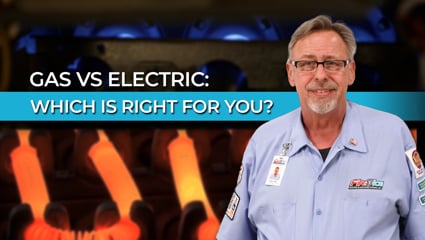
Hi I’m Roger with Fire & Ice. Deciding which furnace can seem like an almost impossible endeavor. There are so many different options, not to mention features, but one of the first questions we get asked is: which should I get? Gas or electric? IN this video, we’ll go over the differences between the two furnace types, who should consider which and take a quick look at their costs. We hope you’ll better understand which type of furnace is right for you by the end of this video.
Gas vs. Electric Furnaces: Operational Differences
On the surface, both pieces of equipment effectively do the same thing: they heat your home. But they do this by very different means. Whether it’s a gas or electric system, both are considered part of a central air system and are connected to ductwork. Both systems work by taking the unconditioned air from the house via a blower motor, heating that air, and distributing that air back out to the rest of the house.
The heating source is the primary difference between the two systems. For instance, a gas furnace produces heat by burning natural gas or propane. The heat runs through a heat exchanger that heats the air passing over it. Unfortunately, all gas furnaces produce carbon monoxide as a byproduct of combustion. Therefore, exhaust gasses will have to be carefully exhausted outside through your chimney or via PVC flue pipes. Gas furnaces can vary significantly based on their gas valves, igniters, blowers, and even secondary heat exchangers in high-efficiency furnaces.
On the other hand, electric furnaces heat the air using electric heating coils, also known as heat strips. In most applications, they are used as auxiliary heat or emergency heat when a heat pump cannot provide enough heat on its own. In a way, it works a lot like a toaster. First, electricity runs through a series of coils that get super-heated. The air is then warmed as it passes through the coils.
Gas vs. Electric Furnaces: Application Differences
Two main factors go into deciding between a gas or electric furnace. The first is access to natural gas and the region you live in. Historically speaking, natural gas makes up the lion's share of fuel sources used to heat homes across the United States. Therefore, gas furnaces are most commonly found in the Midwest and the northeastern United States. Conversely, if you live in an area of the United States where the winters are milder, like in the south or the southwestern United States, electric furnaces and heat pumps are more widespread. Here in Central Ohio, we see both gas and electric furnaces. When we see electric furnaces, it's often in instances where natural gas isn’t available.
Gas vs. Electric Furnaces: Cost Differences
Generally speaking, heating a home with electricity has always been more expensive than natural gas. It’s hard to give exact numbers but historically, heating a home via electricity has always been more costly than natural gas. Especially in regions where the need for heat in the winter is higher.
While an electric furnace is considered 100% efficient in that it converts all the energy toward heating your home, it can be costly if the demand for heat is high and auxiliary heat is needed. Conversely, a high-efficiency gas furnace might help lower your utility bill by converting 90% or more of the fuel used towards heat. However, it generally comes with a higher upfront investment than a standard efficiency gas furnace.
If we look at installing the two types of equipment, they are nearly identical in price. A new electric furnace costs between $3,400 to $7,600 with installation, while a gas furnace can range between $3,000 and $9,000. The significant difference is that most electric furnaces need a compatible heat pump to provide enough heat, adding another $5,500 to $13,000. High-efficiency heat pumps can provide reliable heat even in sub-freezing temperatures. They are minimizing the need for expensive auxiliary heat. Going over options with a residential sales professional can help you decide which type of furnace is right for you.
Gas vs. Electric Furnaces: Which is better?
So, let’s review; if you’re looking for a cost-effective way to heat your home and live in a warmer climate. Or you are looking to lower your environmental impact. An electric furnace might be worth considering. Not to mention, high-efficiency heat pumps on the market today can provide heat in sum-freezing temperatures. However, electric furnaces require a heat pump, especially in cooler climates which adds cost. And the price of electricity is generally much higher than the cost of natural gas.
Gas furnaces are ideal for homeowners who already have access to natural gas and live in an area that experiences harsh winters. And new technology has made high-efficiency gas furnaces have a much lower environmental impact. However, they have more parts and processes that require a knowledgeable technician to maintain the equipment.
I hope you have a better understanding of the differences between the two furnace types. If you consider a new furnace for your home and live in the Central Ohio area, please schedule a free in-home estimate with our residential sales professionals. We’d love to sit down and go over all your options. Thank you for watching, and we look forward to making your day better.
