

Author:
Revised:
July 23rd, 2026
If you're a homeowner, you've probably dealt with at least one plumbing issue: a slow drain, a dripping faucet, a toilet that won't stop running. Some of these are minor annoyances you can handle yourself. Others are warning signs that something bigger is going on.
The tricky part? It's not always obvious which is which.
Whether you're dealing with a problem right now or just want to be prepared, this guide will help you make smart, confident decisions about your home's plumbing.
Slow or Clogged Drains
This is the one nearly every homeowner will deal with at some point. A drain that's slow to empty or completely backed up is the most common plumbing issue in residential homes.
What's usually happening: In kitchen sinks, the culprit is almost always a buildup of grease, food particles, and soap residue. In bathrooms, it's hair and soap scum. These accumulate over time inside the drain pipe, gradually narrowing the opening until water can't pass through efficiently.
What you can try:
- Remove the drain stopper or cover and clean out any visible debris
- Use a plunger (a flat-bottomed plunger for sinks, a flanged plunger for toilets)
- Try a drain snake (also called a hand auger) for clogs deeper in the pipe
A note on chemical drain cleaners: We generally don't recommend them. Products like Drano and Liquid-Plumr can corrode older pipes over time, and they rarely solve the underlying problem. They may clear enough of the clog to restore flow temporarily, but the buildup is still there. If you're reaching for a chemical drain cleaner more than once or twice a year on the same drain, there's a deeper issue worth addressing.
When to call a plumber:
- Multiple drains in your home are slow or backing up at the same time. This usually points to a main sewer line issue, not an individual drain clog.
- The clog keeps coming back after clearing it
- Water is backing up into other fixtures (for example, flushing the toilet causes water to rise in the shower)
- You notice a sewage smell coming from the drain
What affects cost: A single drain cleaning is one of the more affordable plumbing service calls. Costs go up if the clog is in the main sewer line rather than an individual fixture, or if hydro jetting is needed to clear heavy buildup or tree root intrusion. Your plumber should be able to give you a clear quote before any work begins.
Running Toilet
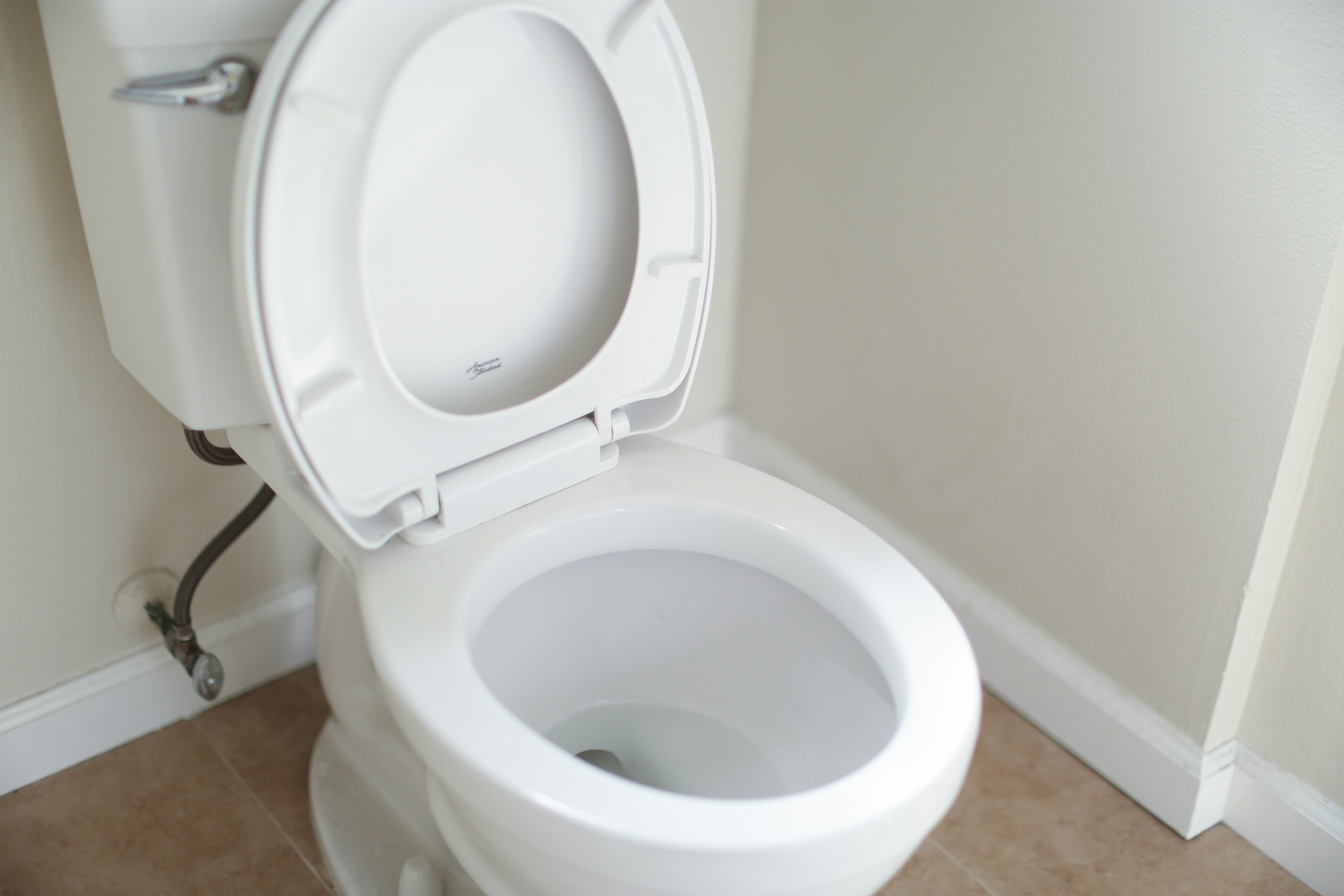
A running toilet might seem like a small thing, but it can waste up to 200 gallons of water per day. That's not just annoying. It shows up on your water bill.
What's usually happening: Inside the tank, a rubber piece called the flapper creates a seal between the tank and the bowl. When you flush, the flapper lifts to let water through, then drops back down to seal it. Over time, the flapper warps, cracks, or develops mineral buildup, and the seal fails. Water trickles continuously from the tank into the bowl, and the fill valve keeps running to compensate.
Less commonly, the issue is with the fill valve itself, the float mechanism, or the flush valve assembly.
What you can try:
- Open the tank and check the flapper. If it's visibly warped, cracked, or doesn't sit flush, replace it. Flappers cost a few dollars at any hardware store and take about five minutes to swap.
- Check the float. If the water level in the tank is too high (above the overflow tube), adjust the float downward.
- Check the fill valve. If it's hissing or running intermittently, it may need replacing.
When to call a plumber:
- You've replaced the flapper and adjusted the float, but the toilet is still running
- The toilet runs intermittently on its own (sometimes called "phantom flushing"). This can indicate a slow leak from the tank into the bowl that a simple flapper swap won't fix.
- The toilet is old enough that replacement parts are hard to find or don't fit well
What affects cost: Simple component replacements like a flapper or fill valve are among the least expensive plumbing repairs. A full flush mechanism rebuild costs more but is still relatively modest. If the toilet itself is 20+ years old and repairs aren't holding, full replacement may be the better long-term investment. The age and condition of the toilet are the biggest factors in whether this is a minor repair or a replacement conversation.
Leaky Faucet
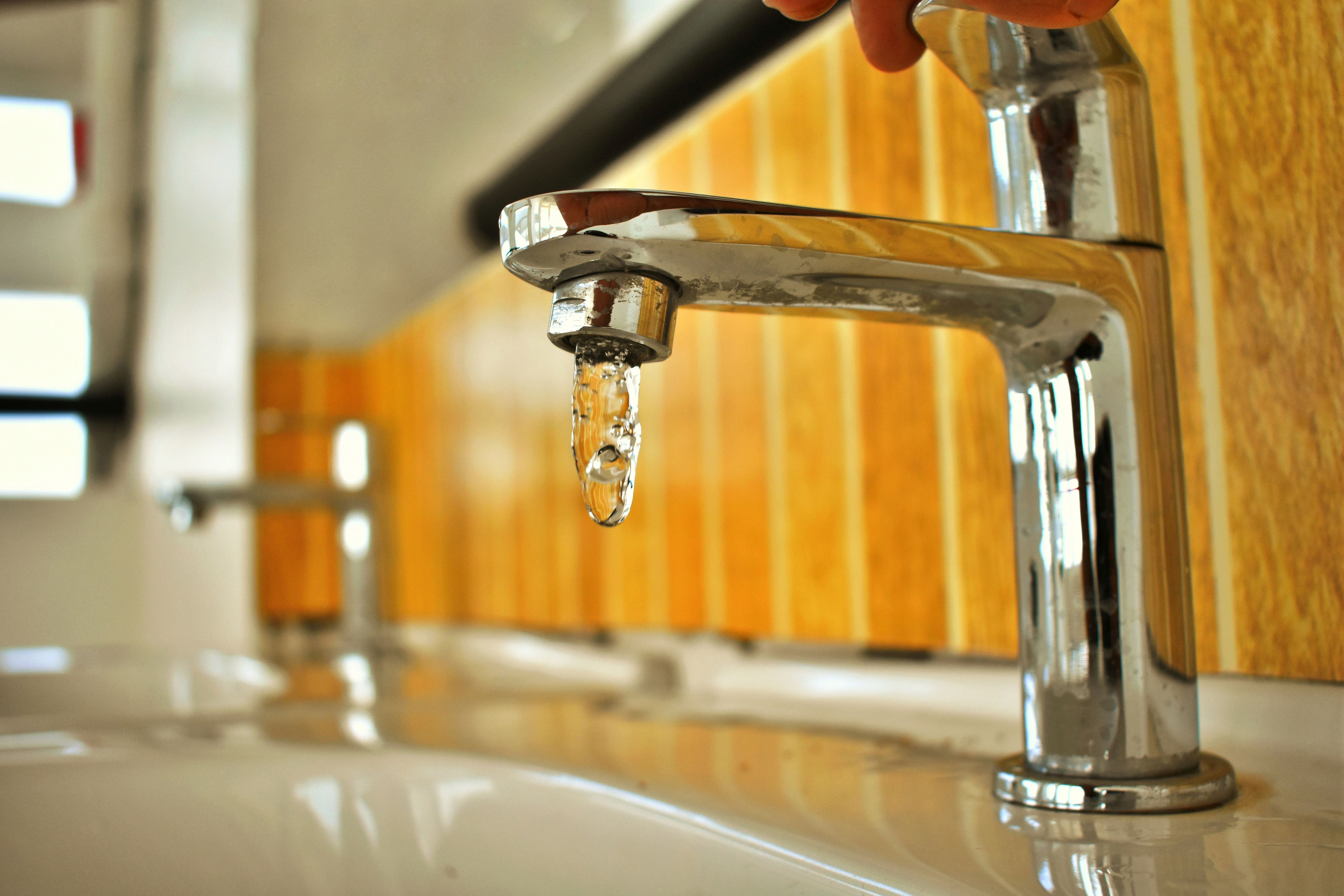
A dripping faucet is one of those problems that's easy to ignore, until you realize a faucet dripping once per second wastes over 3,000 gallons per year.
What's usually happening: Faucets rely on internal seals (O-rings, washers, cartridges, or ceramic discs depending on the type) to stop water flow when you turn the handle off. These components wear out over time, especially in hard water areas like Central Ohio where mineral deposits accelerate wear.
There are two kinds of leaks to distinguish:
- Drip from the spout: Usually a worn washer, O-ring, or cartridge inside the faucet body. This is the more common and usually simpler repair.
- Leak from the base: Often means an O-ring has failed where the faucet body meets the sink, or the faucet itself has corroded. These can cause water damage to the countertop or cabinet below if left unaddressed.
What you can try: If you're comfortable turning off the water supply under the sink and disassembling the faucet handle, replacing a worn washer or cartridge is a manageable DIY project. Your faucet manufacturer's website usually has diagrams showing the internal parts for your specific model.
When to call a plumber:
- You can't identify the faucet type or find replacement parts
- The leak is from the base and causing water damage
- The faucet is corroded or visibly deteriorating
- You have a wall-mounted faucet. These require working inside the wall and are not a DIY job.
What affects cost: Repairing an existing faucet (replacing internal components) is significantly less expensive than replacing the entire fixture. The type of faucet matters too. Standard kitchen and bathroom faucets are straightforward, while specialty or high-end fixtures can increase both parts and labor. If the faucet is corroded beyond repair, your plumber can walk you through replacement options at different price points.
Join Our Newsletter
Receive our newsletter which includes special deals, news, and more.
By submitting this form and signing up for texts, you consent to receive customer care and marketing messages from Fire & Ice Heating, Cooling, Plumbing, and Electrical at the number provided, including messages sent by an autodialer. Consent is not a condition of purchase. Msg & data rates may apply. Msg frequency varies. Unsubscribe at any time by replying STOP or clicking the unsubscribe link (where available). Reply HELP for help. Privacy Policy
Low Water Pressure
When the shower barely trickles or it takes forever to fill a pot, low water pressure is the likely culprit. But "low water pressure" is a symptom, not a diagnosis, and the cause matters a lot.
Single fixture vs. whole-house: This is the first question to answer, because it changes everything.
If it's one fixture: The aerator on a faucet or the showerhead may be clogged with mineral deposits. Unscrew it, soak it in white vinegar overnight, and reinstall. This solves the problem more often than people expect.
If it's the whole house: The issue is upstream, and the causes range from simple to serious:
- Municipal supply issue: Check with neighbors. If they're experiencing the same thing, it's a city water supply issue, not your plumbing.
- Partially closed shut-off valve: Check the main water shut-off valve (usually near the water meter) and make sure it's fully open. This happens more often than you'd think, especially after recent work on the home.
- Corroded or scaled pipes: In older homes with galvanized steel pipes, mineral buildup inside the pipes gradually reduces the internal diameter. This is a progressive problem. It gets worse over time, not better.
- Hidden leak: A leak in the main water line between the street and your house can cause pressure drops. You may also notice an unexplained increase in your water bill.
- Failing pressure regulator: If your home has a pressure regulator (also called a pressure-reducing valve), it can fail and restrict flow. These typically last 10 to 15 years.
When to call a plumber:
- Whole-house pressure drop that isn't a municipal issue
- Pressure is dropping gradually over weeks or months. This suggests pipe corrosion or a growing leak.
- You suspect a leak but can't find it
What affects cost: The range here is wide because the causes are so different. A pressure regulator replacement is a relatively contained repair. Corroded galvanized pipes that need partial or full repiping is a much larger project. Leak detection and repair falls somewhere in between depending on where the leak is and how accessible it is. A proper diagnosis is the first step. The cause determines the scope, and the scope determines the cost.
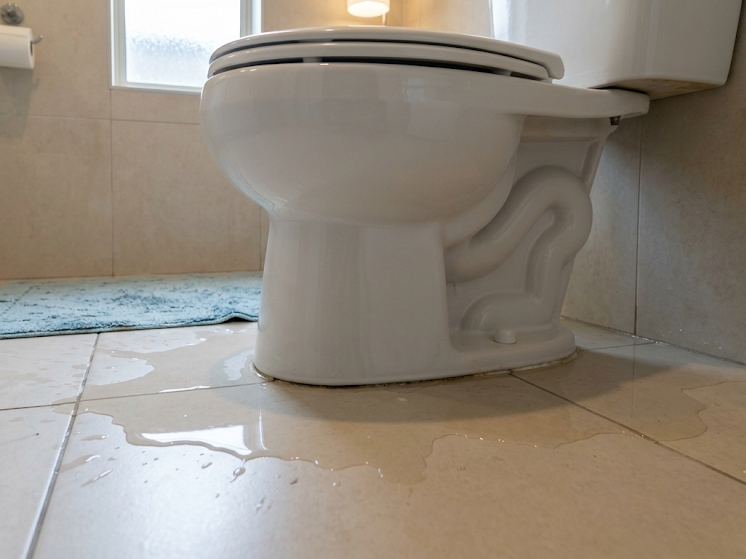
Toilet Leaking at the Base
If you notice water pooling around the base of your toilet, don't ignore it. This is almost never cosmetic. It typically means the wax ring that seals the toilet to the floor flange has failed.
What's happening: Every toilet sits on a wax ring, a thick, pliable ring of wax that creates a watertight seal between the bottom of the toilet and the drain pipe in the floor. Over time (or if the toilet has shifted), this seal breaks. When it does, water and sewage can seep out with each flush.
Why this is urgent: The water leaking from a failed wax ring isn't clean water. It's from the drain side of the toilet. Beyond the hygiene concern, this water is soaking into your subfloor with every flush. Left unaddressed, it can cause structural rot, mold growth, and damage that costs far more to repair than the wax ring replacement itself.
What you can try: This is technically a DIY-possible repair (remove the toilet, scrape off the old wax ring, install a new one, reset the toilet), but it requires some confidence and the right tools. The toilet is heavy, the flange bolts can be corroded, and if you don't reset the toilet evenly, you'll just break the seal again.
When to call a plumber:
- You're not comfortable lifting and resetting a toilet
- The floor around the toilet feels soft or spongy. This means water damage has already started.
- The floor flange (the fitting the toilet bolts to) is cracked, rusted, or sitting below floor level
- The leak returns after you've already replaced the wax ring once
What affects cost: The wax ring replacement itself is one of the more affordable plumbing repairs. What can increase the cost is the condition of the floor flange. If it needs repair or replacement, that adds to the job. The real cost risk is waiting too long. If the subfloor has water damage from a leak that's been going for weeks or months, that's a separate and significantly more expensive repair. This is the plumbing problem where acting early saves the most money.
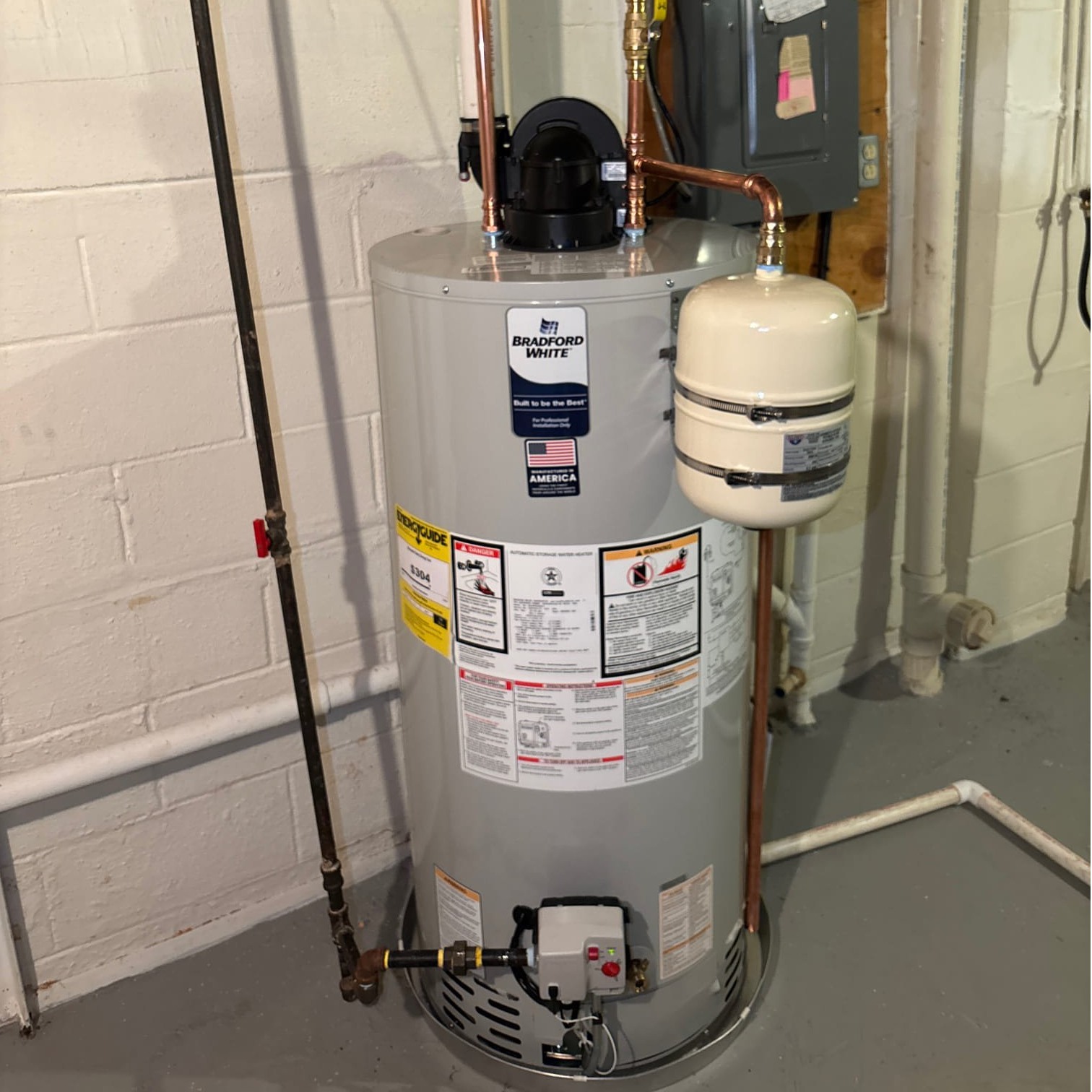
Water Heater Issues
Your water heater is one of those appliances that works quietly in the background until it doesn't. And when it stops working, especially in the middle of winter, you notice immediately.
Common signs your water heater needs attention:
- No hot water or inconsistent temperature: Could be a failed heating element (electric) or thermocouple/pilot light issue (gas). Could also mean the unit is undersized for your household's demand.
- Strange noises (popping, rumbling, banging): Sediment buildup at the bottom of the tank. The noises are pockets of water being trapped under sediment and rapidly heating. This reduces efficiency and can shorten the tank's life.
- Rusty or discolored hot water: If only the hot water is discolored, the anode rod inside the tank may be spent. The anode rod is a sacrificial component designed to corrode instead of the tank itself. Once it's gone, the tank starts corroding.
- Leaking from the tank: A small amount of moisture from the temperature and pressure (T&P) relief valve is normal operation. But water pooling under the tank itself, especially from the bottom, usually means internal corrosion has caused a tank failure. This is generally not repairable.
- Age: Most tank water heaters last 8 to 12 years. If yours is in that range and showing any of the above signs, replacement is likely the better investment than repair.
What you can try:
- Check the pilot light (gas) or circuit breaker (electric) before calling. Sometimes it's that simple.
- Set the thermostat to 120°F if it's been adjusted. This is the recommended setting for safety and efficiency.
- Flush the tank annually to reduce sediment buildup (your owner's manual will have instructions)
When to call a plumber:
- The tank is leaking from the body. This means replacement, not repair.
- You have no hot water and the pilot light/breaker check didn't solve it
- The unit is 10+ years old and showing multiple symptoms
- You're interested in upgrading to a tankless water heater. This involves different gas line and venting requirements and should always be professionally installed.
What affects cost: Water heater costs vary significantly depending on whether you're looking at a minor repair (like a heating element) or a full replacement. The type of unit matters. Tankless water heaters have a higher upfront cost than traditional tank units, but they last longer and have lower operating costs over time. Size, fuel type (gas vs. electric), and whether any gas line or venting modifications are needed also factor in. A plumber can walk you through the options and help you weigh the upfront investment against long-term savings.
Sewage Smell in Your Home
If you smell sewage in your house, your first instinct is probably alarm, and that instinct isn't wrong. But the cause ranges from a five-minute fix to a serious plumbing issue.
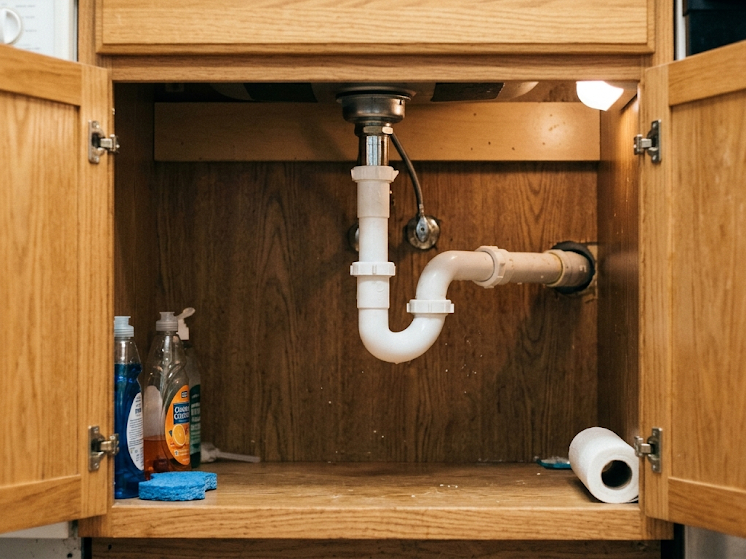
The most common cause is a dried-out P-trap. Every drain in your home has a curved section of pipe underneath it (the P-trap) that holds a small amount of water. This water acts as a seal, blocking sewer gases from rising up through the drain into your home. If a drain hasn't been used in a while, like a guest bathroom, a basement floor drain, or a utility sink, the water in the trap evaporates and the seal breaks.
The fix: Run water in every drain you haven't used recently. Two to three minutes of flow is enough to refill the trap. If the smell goes away, that was it.
If the smell persists after refilling all traps, the issue is deeper:
- Broken or cracked vent pipe: Your plumbing system has vent pipes that run up through the roof to equalize pressure and allow sewer gases to escape outside. If a vent pipe cracks or gets blocked (bird nests, ice dams, debris), gases can be forced back into the home.
- Damaged wax ring: As covered above, a failed wax ring on a toilet can allow sewer gases to escape at the base.
- Sewer line issue: A cracked, offset, or deteriorating sewer line can allow gases to seep into your home, especially through basement floor drains.
When to call a plumber:
- The smell persists after running water in all drains
- The smell is strongest in one area of the house. This can help pinpoint the source.
- You also notice slow drains or gurgling sounds, which suggest a venting or sewer line issue
What affects cost: If it's a dried P-trap, it's free. Just run the water. Beyond that, the range depends entirely on the source. A vent pipe repair is a moderate fix. A sewer line issue requires a camera inspection first to determine the scope, and repairs are quoted based on what the inspection reveals. The good news is that the diagnostic step, the camera inspection, gives you a clear picture before any major work begins.
Frozen or Burst Pipes
This is Central Ohio's seasonal plumbing risk. When temperatures drop below freezing, especially during the sudden cold snaps we get in January and February, exposed or poorly insulated pipes can freeze. And frozen pipes can burst.
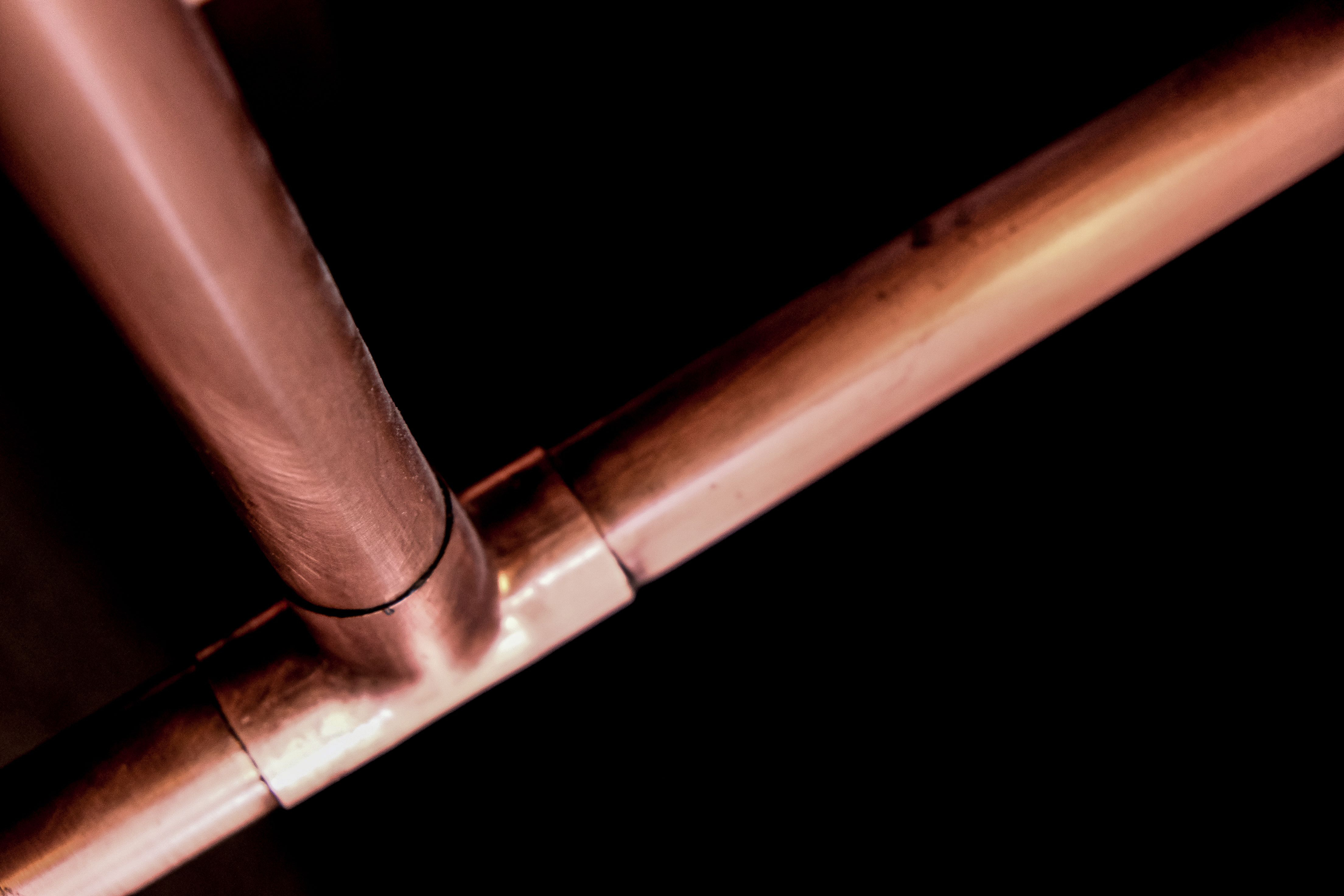
Why pipes burst: It's not the ice itself that causes the break. When water freezes inside a pipe, it expands and creates pressure between the ice blockage and the closed faucet. That pressure builds until the pipe fails, often at a joint or fitting. The burst happens, but you may not know it until the ice thaws and water starts flowing through the break.
Pipes most at risk:
- Outdoor hose bibs and supply lines to exterior faucets
- Pipes running through unheated spaces like crawl spaces, garages, attics, and exterior walls
- Pipes near exterior walls with poor insulation
Prevention:
- Disconnect and drain garden hoses before the first freeze
- Insulate exposed pipes in unheated areas (pipe insulation foam is inexpensive and easy to install)
- During extreme cold, let faucets on exterior walls drip slightly. The moving water is less likely to freeze.
- Keep your thermostat at 55°F or above, even when you're away
- Know where your main water shut-off valve is so you can act fast if a pipe does burst
If you suspect a frozen pipe:
- Open the faucet the pipe supplies. This relieves pressure as the ice melts.
- Apply gentle heat to the frozen section using a hair dryer, heating pad, or warm towels. Never use an open flame.
- If you can't locate the frozen section or can't thaw it, call a plumber before it bursts
When to call a plumber:
- You turn on a faucet and nothing comes out during freezing weather. The pipe is frozen and needs professional attention before it fails.
- You see water spraying or pooling where it shouldn't. Shut off the main water valve immediately and call for emergency service.
- A pipe has already burst. This is a true plumbing emergency.
What affects cost: Thawing a frozen pipe before it bursts is a relatively straightforward service call. A burst pipe repair costs more, and the biggest factor is location. A pipe that's easy to access is a simpler fix than one buried in a wall or under a slab. The real expense, though, is water damage. If a burst pipe goes undetected while you're away, restoration costs can dwarf the plumbing repair itself. This is the plumbing problem where prevention is worth far more than the cure.
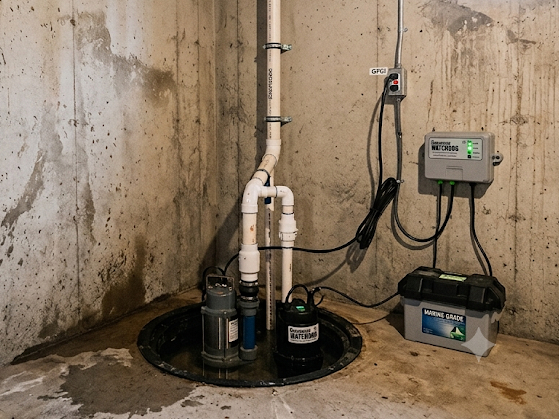
Sump Pump Failure
If your home has a basement, and most homes in Central Ohio do, there's a good chance you have a sump pump. It's the quiet workhorse that keeps groundwater from flooding your basement, especially during spring thaws and heavy rain.
The problem with sump pumps is that you don't know they've failed until water is already coming in.
Common causes of sump pump failure:
- Power outage: The pump can't run without electricity. Heavy storms that produce the most groundwater are also the ones most likely to knock out power.
- Stuck or jammed float switch: The float switch tells the pump when to turn on. If it gets stuck against the side of the pit or tangled with debris, the pump won't activate.
- Overwhelmed capacity: During extreme rainfall, a single pump may not be able to keep up with the volume of water entering the pit.
- Age: Sump pumps typically last 7 to 10 years. If yours is in that range and you've never had it serviced, it may fail when you need it most.
- Clogged discharge line: If the pipe that carries water away from your home gets clogged or frozen, the pump runs but the water has nowhere to go.
What you can do:
- Test it quarterly: Pour a bucket of water into the sump pit. The float should rise, the pump should kick on, and the water should drain out. If it doesn't, the pump needs service.
- Check the discharge line: Make sure it's clear and directing water away from your foundation
- Consider a battery backup: A battery backup sump pump is one of the best investments for basement flood prevention. It kicks in automatically during power outages.
When to call a plumber:
- The pump doesn't activate when the pit fills
- The pump runs continuously but the pit isn't draining
- You hear unusual grinding or rattling sounds from the pump
- Your basement has flooded or shows signs of moisture despite having a sump pump
What affects cost: A standard sump pump replacement is a moderate investment. Adding a battery backup system increases the upfront cost but is one of the highest-value upgrades you can make for basement flood prevention. The cost of a flooded basement is many times more than the cost of a working pump and backup system. Keeping your sump pump maintained is one of the best-value items on this entire list.

When to DIY vs. When to Call a Plumber
We know: calling a plumber isn't free. And plenty of minor plumbing tasks are manageable for a handy homeowner. But there's a clear line between a DIY project and a situation that needs professional tools, training, and licensing.
Generally safe to DIY:
- Replacing a toilet flapper or fill valve
- Unclogging a single drain with a plunger or hand snake
- Cleaning faucet aerators and showerheads
- Replacing a showerhead or faucet handles
- Running water in unused drains to refill P-traps
- Insulating exposed pipes for winter
- Any leak you can't identify the source of
- Gas line work of any kind. This is not a DIY job under any circumstances.
- Repiping or replacing sections of supply line
- Sump pump replacement
- Persistent or recurring problems you've already tried to fix
The rule of thumb: if you're dealing with a single, visible, accessible fixture and a well-documented repair, DIY can save you money. If the problem involves anything behind walls, underground, or connected to your main water or sewer lines, the cost of getting it wrong almost always exceeds the cost of hiring a professional.
There's no shame in calling for help. Licensed plumbers have diagnostic tools (cameras, pressure testing equipment, leak detection), training, and experience that go well beyond what any YouTube video can provide. A plumber's job isn't just to fix the problem. It's to make sure they're fixing the right problem.
Taking Care of Your Home's Plumbing
Most plumbing problems start small. A slow drain gets slower. A drip becomes a steady leak. A faint sewage smell gets stronger. The best thing you can do as a homeowner is pay attention to these early signals and address them before they escalate into emergencies.
A few habits that prevent the majority of plumbing emergencies:
- Never pour grease or cooking oil down a drain
- Run water in all drains at least once a month, including basement floor drains and guest bathrooms
- Know where your main water shut-off valve is, and make sure it actually works (they can seize up from disuse)
- Test your sump pump quarterly
- Winterize exterior plumbing before the first freeze
- Schedule a professional plumbing inspection if your home is 25+ years old and has never had one
At Fire & Ice Heating, Cooling, Plumbing, and Electrical, we handle everything from routine drain cleaning to full sewer line replacements. Our licensed plumbers diagnose the actual problem, not just the symptom, and walk you through your options so you can make the decision that's right for your home and your budget.
If you're in Columbus or Central Ohio and dealing with a plumbing issue, or want to get ahead of one, we'd love to help.
