

Author:
Revised:
September 2nd, 2026
Electrical problems are easy to ignore. A flickering light, a breaker that trips now and then, an outlet that feels a little warm. None of these seem urgent in the moment. But electrical failures cause more than 30,000 home fires every year in the United States, according to the Electrical Safety Foundation International. Most of those fires start inside walls, where worn wiring and loose connections generate heat that no one can see until it's too late.
The good news is that most electrical fires give warning signs before they become emergencies. Knowing what to look for, and what to do about it, is one of the most valuable things you can learn as a homeowner.
1. Flickering or Dimming Lights
A single bulb that flickers is usually just a loose bulb or a bulb going bad. That's not what we're talking about here.
If lights across a room or throughout your house are flickering or dimming, the cause is almost always a loose wire connection somewhere in the circuit: at the outlet, the switch, the junction box, or the panel itself. When a large appliance like your air conditioner or refrigerator kicks on and draws a surge of current, a loose connection can cause a momentary voltage dip that shows up as a flicker.
The more serious version of this is a failing neutral wire. The neutral carries current back to the panel, and if that connection loosens, voltage can redistribute unevenly across your home's circuits. You might see some lights dim while others get noticeably brighter. This can damage electronics and appliances, and it creates a real shock hazard.
What to watch for: One bulb flickering is probably the bulb. One room flickering is that room's circuit. The whole house flickering, especially if some lights get brighter while others dim, means a loose main connection or neutral issue. That's a same-day call to an electrician.
What not to do: Don't open your electrical panel and try to tighten connections yourself. The main lugs remain energized even when individual breakers are off.
2. Circuit Breakers That Keep Tripping
A breaker that trips is doing exactly what it's designed to do: cutting power to a circuit before the wiring overheats. The problem isn't the trip itself. It's whatever is causing the trip.
The most common cause is a simple overload. You're drawing more power through that circuit than it's rated for. This happens when too many devices or appliances share the same circuit, which is especially common in older homes that were wired for a fraction of the electrical load we use today.
Less common but more dangerous: a short circuit, where a hot wire and neutral wire make unintended contact due to damaged insulation, a failed device, or a rodent chewing through wiring. This causes a sudden current surge that trips the breaker immediately.
What to try: Reduce the load on that circuit by unplugging a few things, then reset the breaker. If it holds, you've identified an overload. You may need a dedicated circuit added for high-draw appliances.
When to call: If the breaker trips again immediately after resetting, or if it trips with a spark, a pop, or a burning smell, stop resetting it and call an electrician. Repeatedly forcing a breaker back on without diagnosing the cause can lead to an arc flash at the panel, which can injure you and damage the equipment.
One more thing: never replace a breaker with a higher-amperage breaker to "solve" the tripping. If the wire gauge on that circuit isn't rated for the higher amperage, you've just removed the safety mechanism that prevents the wire from overheating inside your walls.
3. Warm or Discolored Outlets and Switch Plates
An outlet or switch plate that feels warm to the touch is telling you something is generating heat behind the wall. The most common cause is a loose wire connection at the terminal, which creates electrical resistance. Resistance generates heat. Sustained heat can ignite the wood framing and insulation surrounding the electrical box.
Discoloration (black or brown scorch marks on the outlet or the wall plate) means this has been happening for a while. The heat has already been intense enough to scorch the plastic.
One exception: A dimmer switch that's slightly warm under normal use is expected. Dimmers regulate voltage by converting excess electricity to heat. But "slightly warm" and "hot to the touch" are very different things. If a dimmer is uncomfortably warm, it may be overloaded or failing.
What to do: If an outlet or switch plate is hot, or if you see any scorch marks or discoloration, shut off that circuit breaker immediately. Do not use that outlet again until a licensed electrician has inspected it. This is not a "wait and see" situation. The heat source is inside the wall, where you can't monitor it.
4. Burning Smell or Buzzing from Outlets or the Panel
This is the most urgent item on this list.
A burning smell near an outlet or your electrical panel means wire insulation is melting. The smell is usually described as burning plastic, though some people notice a "fishy" odor from heated electrical components off-gassing. Either way, it means something is overheating right now.
Buzzing or crackling sounds from an outlet or the panel indicate arcing: electricity jumping across a gap at a loose connection. Arc temperatures exceed 10,000 degrees Fahrenheit, which is hot enough to ignite wood framing on contact.
A correctly functioning electrical system is nearly silent and completely odorless. Any persistent sound or smell is abnormal.
What to do: Stop using the outlet or circuit immediately. Shut off the breaker for that area. If you can't identify which breaker, shut off the main. If you see smoke, sparks, or flames, evacuate and call 911. Do not investigate further yourself.
After addressing immediate safety, call a licensed electrician before restoring power. This is a same-hour situation, not same-day.
5. Two-Prong (Ungrounded) Outlets
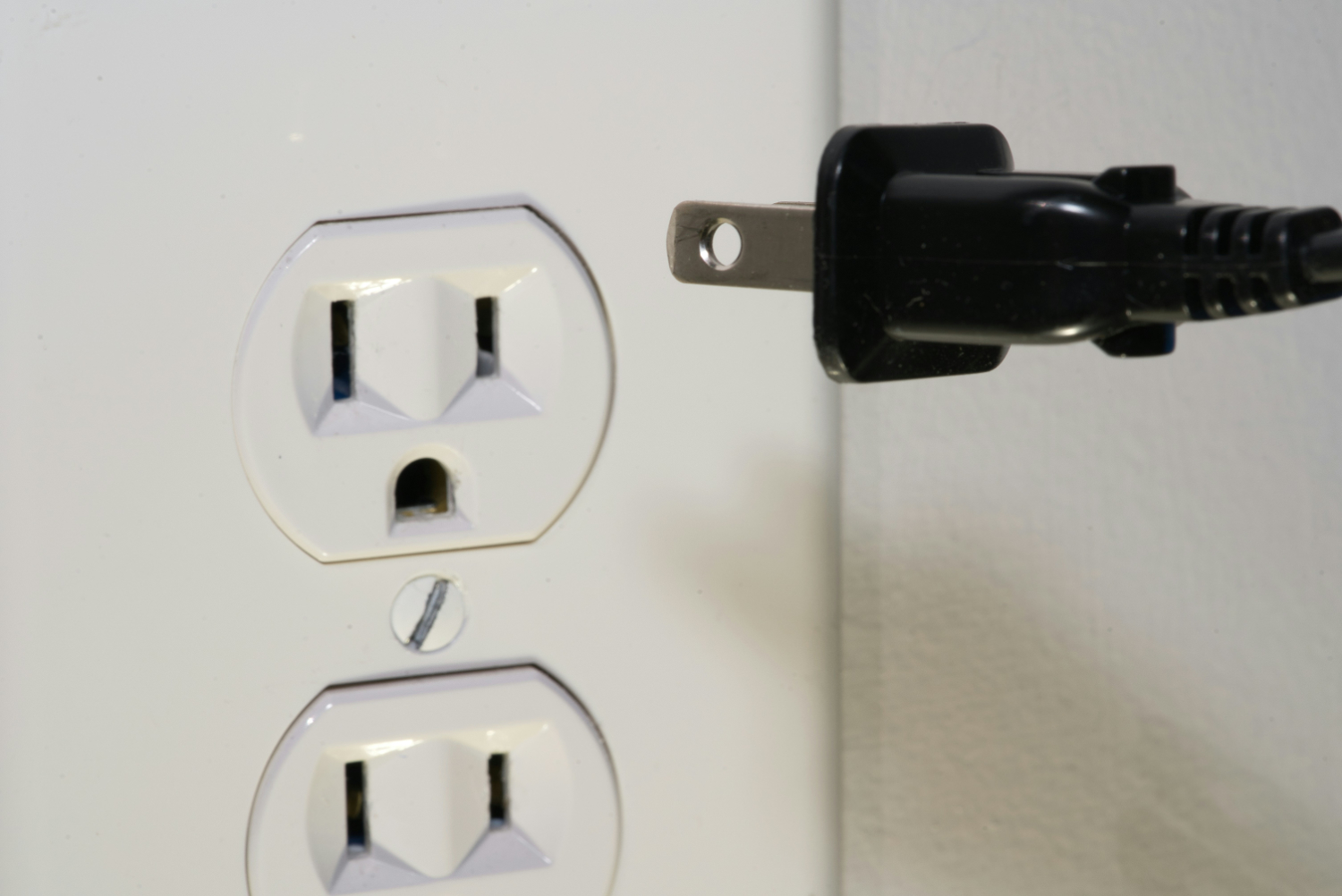
If your home still has two-prong outlets, it means those circuits have no ground wire. The ground wire is a safety path that directs fault current safely back to the panel if something goes wrong. Without it, if a wiring fault energizes the metal housing of an appliance, the electricity's next path to ground could be through you.
Two-prong outlets were standard in homes built before the mid-1960s. The National Electrical Code began requiring grounded outlets in the 1962 edition, but plenty of older homes in Columbus neighborhoods like Clintonville, Bexley, German Village, and Grandview Heights still have them.
The risk is highest in wet areas: kitchens, bathrooms, laundry rooms, and garages, where water lowers your body's electrical resistance and makes shock more dangerous.
What not to do: Don't install three-prong outlets on two-wire circuits without proper remediation. This creates a false ground that looks safe but provides no actual protection. It's a code violation and arguably more dangerous than leaving the two-prong outlet in place.
What an electrician can do: There are three code-compliant approaches. Running new ground wires is the most complete but most expensive solution. Replacing two-prong outlets with GFCI outlets (which the current NEC permits as a substitute on ungrounded circuits) provides shock protection at a lower cost. Or installing a GFCI breaker at the panel protects every outlet on that circuit at once. A licensed electrician can evaluate which approach makes the most sense for your home.
Join Our Newsletter
Receive our newsletter which includes special deals, news, and more.
By submitting this form and signing up for texts, you consent to receive customer care and marketing messages from Fire & Ice Heating, Cooling, Plumbing, and Electrical at the number provided, including messages sent by an autodialer. Consent is not a condition of purchase. Msg & data rates may apply. Msg frequency varies. Unsubscribe at any time by replying STOP or clicking the unsubscribe link (where available). Reply HELP for help. Privacy Policy
6. Aluminum Wiring
Between roughly 1965 and 1973, when copper prices spiked, an estimated 1.5 million U.S. homes were built with aluminum branch circuit wiring instead of copper. The wire itself conducts electricity adequately. The problem is what happens at connection points over time.
Aluminum expands and contracts more than copper with each heating and cooling cycle. Over years, this loosens connections at outlets, switches, and fixtures. Aluminum also oxidizes, forming a layer of aluminum oxide on the wire surface that increases electrical resistance, which generates more heat. The combination of loosening connections and increasing resistance is why the U.S. Consumer Product Safety Commission found that homes with aluminum branch wiring are 55 times more likely to reach fire hazard conditions than homes with copper wiring.
If your home was built between 1965 and 1973, this is worth investigating even if you haven't noticed any symptoms. An electrician can confirm whether your home has aluminum branch wiring by inspecting the wiring at the panel or behind an outlet.
The fix: The CPSC recommends either a full copper rewire or professional "pigtailing," where a licensed electrician connects short copper pigtails to the aluminum wire at every connection point using approved connectors (COPALUM or AlumiConn). This addresses the hazard at the connection points where it actually occurs. This is not a DIY project. The wrong connector type can make the problem worse.
Insurance note: Many Ohio insurers will not write or renew a homeowner's policy on a home with known aluminum branch wiring. Getting this addressed may be a precondition for coverage.
7. Your Electrical Panel Is Outdated
Electrical panels are typically rated for 25 to 40 years. If yours is approaching that range, or if you don't know how old it is, it's worth having a professional evaluate it.
But age isn't the only factor. Two panel brands from the mid-20th century are documented safety hazards regardless of age:
Federal Pacific Electric (FPE) Stab-Lok panels: Testing has documented breaker failure rates between 25 and 60 percent, meaning the breaker may not trip during an overload or short circuit. These panels have been linked to thousands of home fires. If your panel says "Federal Pacific" or "Stab-Lok" on the inside of the door, it should be replaced.
Zinsco panels (sometimes rebranded as GTE-Sylvania): Zinsco breakers can fuse to the bus bar and become physically impossible to trip. A breaker that appears off may still be conducting current. Like Federal Pacific, these should be replaced regardless of their apparent condition.
Beyond brand concerns, many homes in Central Ohio were originally equipped with 60-amp or 100-amp panels. Today's standard is 200-amp service. If you're planning an HVAC upgrade, adding an EV charger, finishing a basement, or installing a hot tub, your panel may not have the capacity to handle the additional load safely. An electrician can assess whether you need a like-for-like panel replacement or a full service upgrade.
One clarification: A panel upgrade and a home rewire are different projects that address different parts of the system. The panel is the distribution point. The wiring runs through your walls to outlets, switches, and fixtures. A new panel doesn't fix old wiring, and new wiring doesn't fix a defective panel. Your electrician will evaluate which one, or both, your home needs.
How Urgent Is Your Situation?
Not every electrical concern is an emergency, but some are. Here's a practical framework for deciding how quickly to act:
Stop what you're doing and call now: Burning smell or smoke from any outlet or the panel. Sparks or visible arcing. An outlet that is hot to the touch. Any outlet with scorch marks. These are active hazards.
Call within 24 hours: A breaker that trips repeatedly or won't stay reset. Whole-house flickering, especially with any heat or smell. Buzzing or clicking from the panel.
Schedule within a few weeks: Confirmed or suspected aluminum wiring. A Federal Pacific or Zinsco panel, even with no current symptoms. A panel that's 40 or more years old. Two-prong outlets in kitchens, bathrooms, or laundry rooms.
Plan for your next home improvement cycle: Two-prong outlets in bedrooms and living areas. 100-amp service with growing electrical demand. A panel between 25 and 40 years old with no symptoms.
A Note About Columbus and Central Ohio Homes
More than two-thirds of Ohio homes were built before 1980, which puts a large portion of the housing stock squarely in the risk window for one or more of these issues. If your home was built before 1965, you may have two-prong outlets or even knob-and-tube wiring. If it was built between 1965 and 1973, aluminum branch wiring is a real possibility. If it was built before the mid-1990s, your panel may be approaching the end of its rated life.
This doesn't mean every older home has an electrical problem. It means that if you're in an older home and you're noticing any of the warning signs above, the age of your home makes it more likely that the cause is worth investigating rather than ignoring.
Taking Care of Your Home's Electrical System
Most electrical problems develop gradually. A connection loosens a little more each year. Insulation gets a little more brittle. Demand on a circuit creeps up as you add devices and appliances. The warning signs in this article are how your home tells you something has shifted from "fine" to "needs attention."
A few habits that help:
- Don't overload outlets with power strips daisy-chained together
- Test your GFCI outlets monthly by pressing the "test" button
- If you're buying an older home, include an electrical inspection in your due diligence, not just the standard home inspection
- If your home has never had a professional electrical evaluation and it's more than 30 years old, it's worth scheduling one
At Fire & Ice Heating, Cooling, Plumbing, and Electrical, our licensed electricians handle everything from outlet replacements to full panel upgrades and home rewiring. We diagnose the actual issue, not just the symptom, and walk you through your options so you can make an informed decision about your home.
Learn More: Electrical Services in Central Ohio
If you're in Columbus or Central Ohio and something on this list sounds familiar, we'd like to help you get it sorted out.
